


When it comes to auto insurance, one of the most misunderstood topics is adding a “named driver” to your policy. Many people assume it is a simple way to save money or that it wo not affect their rate much at all.
The truth is more nuanced.
Who you add to your policy can significantly influence your premium for better or worse. Understanding how this works can help you avoid surprises and make smarter decisions about your coverage.
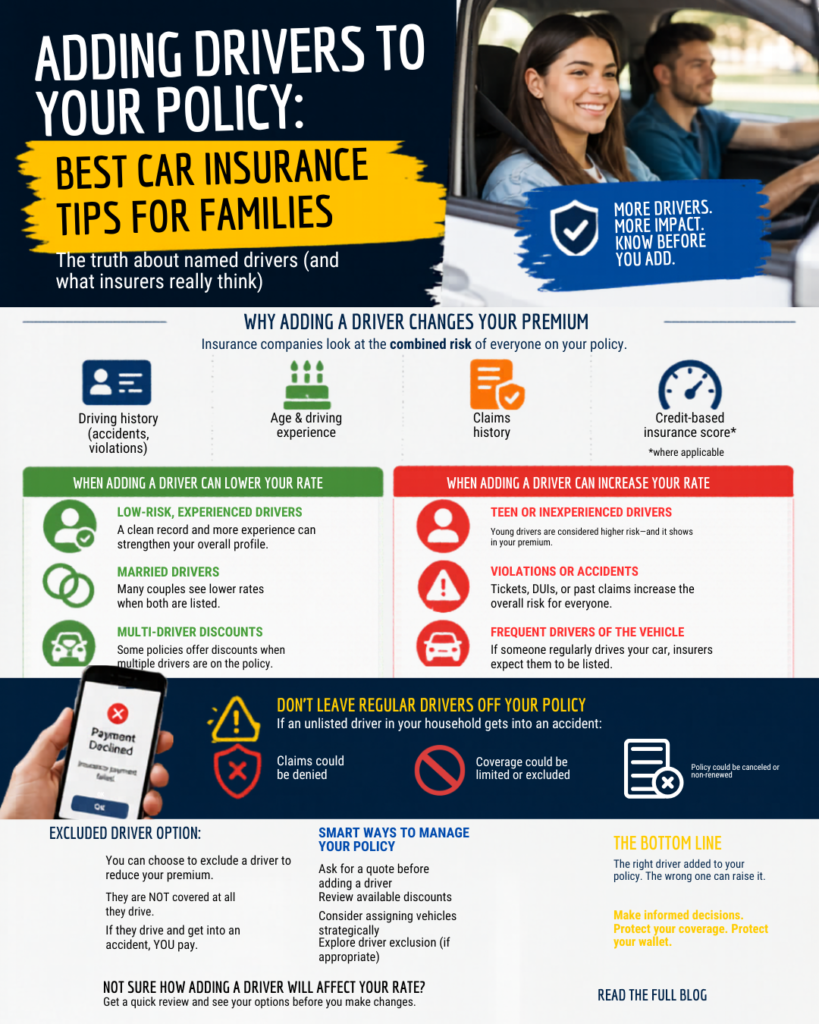
What Is a “Named Driver”?
A named driver is anyone listed on your auto insurance policy who is allowed to drive your vehicle.
This can include:
- Household members (spouse, children, relatives)
- Regular drivers of your vehicle
- In some cases, non-household drivers who frequently use your car
Insurance companies evaluate all listed drivers, not just the primary one, when calculating your rate.
Why Adding a Driver Changes Your Premium
Insurance pricing is based on risk—and every driver brings their own risk profile.
When you add someone to your policy, insurers look at factors like:
- Driving history (accidents, violations)
- Age and driving experience
- Claims history
- Credit-based insurance score (where applicable)
Your premium is then adjusted based on the combined risk of everyone on the policy.
When Adding a Driver Can Lower Your Rate
It is not always bad news—adding a driver can sometimes help.
1. Experienced, Low-Risk Drivers
Adding a driver with a clean record and long driving history can strengthen your overall risk profile.
2. Married Drivers
In many cases, married couples see lower rates due to statistical risk trends.
3. Multi-Driver Discounts
Some policies offer discounts when multiple drivers are listed—especially when bundled with multiple vehicles.
When Adding a Driver Increases Your Rate
This is where most surprises happen.
1. Teen or Inexperienced Drivers
Young drivers are considered higher risk due to limited experience, which can significantly increase premiums.
2. Drivers With Violations or Accidents
Tickets, DUIs, or prior claims can raise the overall risk level—and your cost.
3. Frequent Drivers of the Vehicle
If someone regularly uses your car but is not listed, insurers may require them to be added. Once added, their risk is factored in.
The Risk of Not Listing All Drivers
Some people try to avoid higher premiums by leaving certain drivers off the policy—but this can backfire.
If an unlisted household driver gets into an accident:
- The claim could be denied
- Coverage could be limited or excluded
- Your policy could be cancelled or non-renewed
Insurance companies expect all regular drivers—especially those in your household—to be disclosed.
What About “Excluded Drivers”?
In some cases, you can choose to exclude a driver from your policy.
This means:
- They are not covered at all if they drive your vehicle
- If they do drive and get into an accident, you are responsible for damages
This option can reduce your premium—but it comes with serious risk if not strictly followed.
How Insurance Companies Really Look at It
From an insurer is perspective, it is simple:
If someone has access to your car, they represent potential risk.
That is why underwriting focuses on who could realistically drive the vehicle, not just who you intend to drive it.
A Smarter Way to Manage Your Policy
If you are thinking about adding (or removing) a driver, here are a few smart steps:
- Ask for a quote first before making changes
- Review available discounts (good student, safe driver, etc.)
- Consider assigning vehicles strategically (higher-risk drivers to lower-value cars)
- Explore options like driver exclusion if appropriate
The Bottom Line
Adding a named driver is not just a formality—it directly impacts how your insurance is priced.
The right addition can help your rate. The wrong one can increase it. And leaving someone off your policy can create serious coverage issues when you need it most.
Not sure how adding a driver will affect your rate?
It is worth reviewing before making any changes. A quick policy check can help you understand your options—and avoid costly surprises later.