

When your car is damaged and you file an insurance claim, one of the most common questions is:
“Will they use brand-new parts—or something else?”
It is a fair concern. The type of parts used in repairs can impact everything from how your car looks to how much your claim costs. The reality is, insurance companies do not always default to brand-new parts—and there is a reason for that.
Let’s break it down clearly so you know what to expect.
The Types of Parts Used in Insurance Repairs
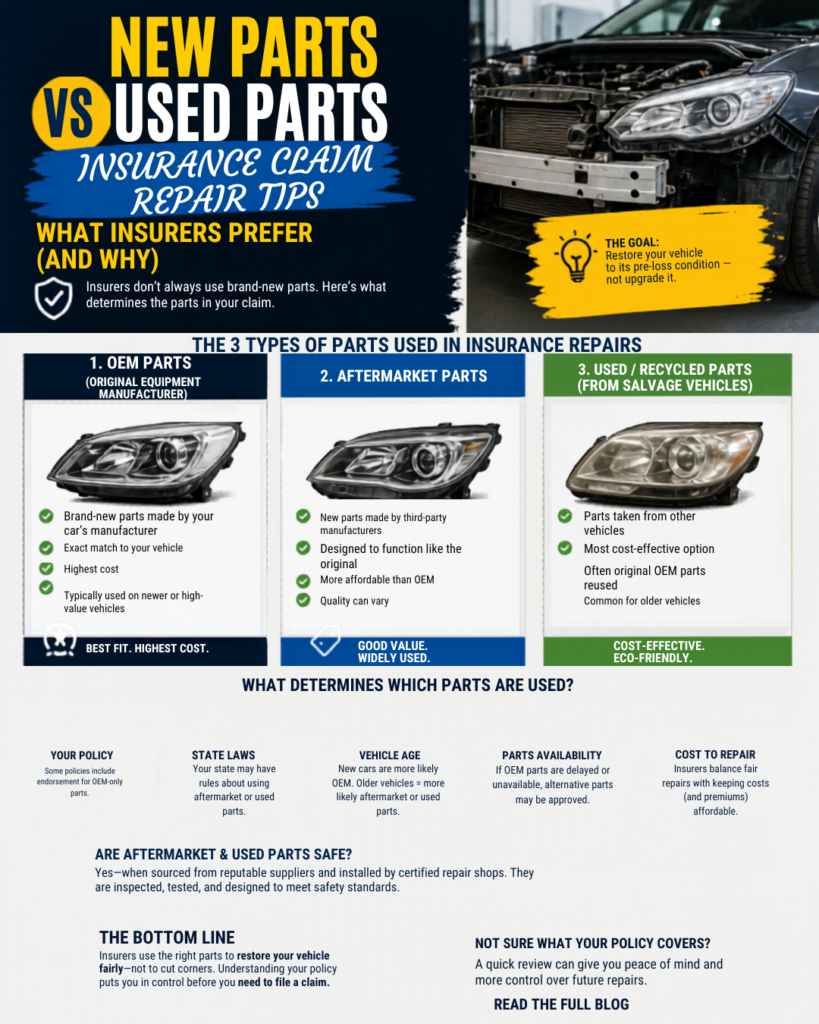
When a vehicle is repaired through an insurance claim, there are typically three types of parts that may be used:
1. OEM Parts (Original Equipment Manufacturer)
These are brand-new parts made by your car is manufacturer.
- Exact match to your vehicle
- Highest cost
- Typically used on newer or high-value vehicles
2. Aftermarket Parts
These are new parts made by third-party manufacturers.
- More affordable than OEM
- Designed to function like the original
- Quality can vary depending on the manufacturer
3. Recycled or Used Parts
These are parts taken from other vehicles (often from salvage yards).
- Most cost-effective option
- Often original OEM parts reused
- Common for older vehicles
Why Insurance Companies Do not Always Use Brand-New Parts
It comes down to one core principle: restoring your vehicle to its pre-loss condition—not upgrading it.
Insurance is designed to make you “whole,” not better off than before the accident.
Here is how that plays out:
- If your car had worn or older parts before the accident, replacing them with brand-new OEM parts could increase its value beyond what it was
- Using comparable parts (aftermarket or recycled) keeps the repair aligned with the vehicle is prior condition
It helps control overall claim costs, which impacts premiums across the board
What Determines Which Parts Are Used?
Several factors influence the decision:
1. Your Policy Coverage
Some policies include endorsements that allow for OEM-only parts, especially for newer vehicles. Without that, insurers typically have flexibility.
2. State Regulations
Certain states have rules around when and how aftermarket or used parts can be used—and require disclosure to the vehicle owner.
3. Age and Condition of Your Vehicle
- Newer cars: More likely to get OEM parts
- Older vehicles: More likely to use aftermarket or recycled parts
4. Availability of Parts
If OEM parts are delayed or unavailable, alternative parts may be approved to speed up repairs.
Are Aftermarket and Used Parts Safe?
This is where many people get concerned—but in most cases:
- Reputable aftermarket parts are tested for fit and function
- Recycled parts are inspected before being reused
- Repair shops work with approved vendors to meet safety standards
That said, quality can vary—so working with a trusted repair shop matters.
Can You Request OEM Parts?
Yes—but there is a catch.
If your policy does not include OEM coverage, you can still request original parts, but you may need to pay the difference out of pocket. This is why it is important to review your policy before you ever need to file a claim.
The Hidden Cost Factor Most People Miss
Using strictly OEM parts on every claim would significantly increase repair costs—and over time, that leads to higher insurance premiums for everyone.
So while it might feel like a downgrade in some cases, the broader goal is balancing:
- Fair repairs
- Reasonable claim costs
Long-term affordability of insurance
When It Makes Sense to Upgrade Your Coverage
If you drive a newer vehicle or want peace of mind, it may be worth asking about:
- OEM parts endorsements
- New car replacement coverage
- Extended protection options
These can give you more control over how your vehicle is repaired after a loss.
The Bottom Line
Insurance companies do not automatically choose used or aftermarket parts to cut corners—they are aiming to repair your vehicle to its original condition in a cost-effective, fair way.
Understanding how this works puts you in a better position to make informed decisions about your coverage before you ever need it.
Not sure what your current policy allows when it comes to repairs?
A quick review can clarify your options and help you decide if you want more control over the parts used in a future claim.