

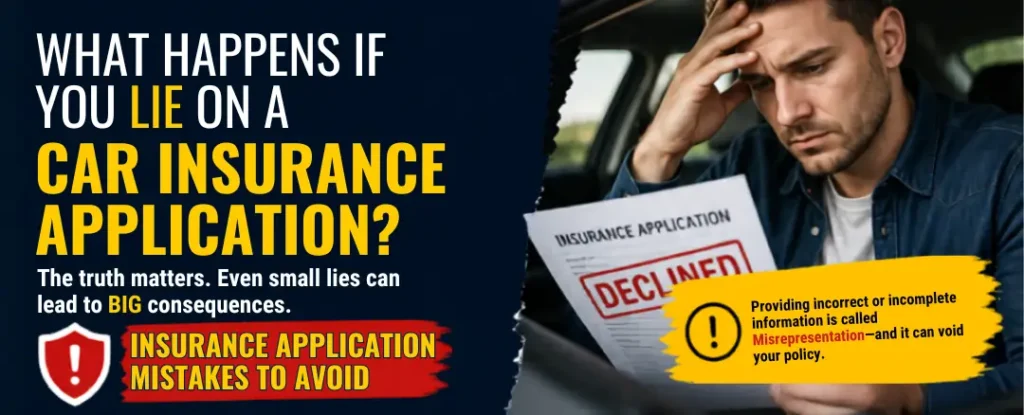
When applying for car insurance, it can be tempting to “adjust” a few details—maybe where the car is kept, how often it is driven, or who actually uses it. It might feel harmless, especially if it lowers your premium.
But here is the reality:
Providing inaccurate information on your application can lead to serious consequences—especially when you need your policy the most.
Let’s walk through what actually happens and why honesty matters more than most people realize.
What Counts as “Lying” on an Insurance Application?
It is not always intentional. Many issues come from misunderstandings or small omissions.
Common examples include:
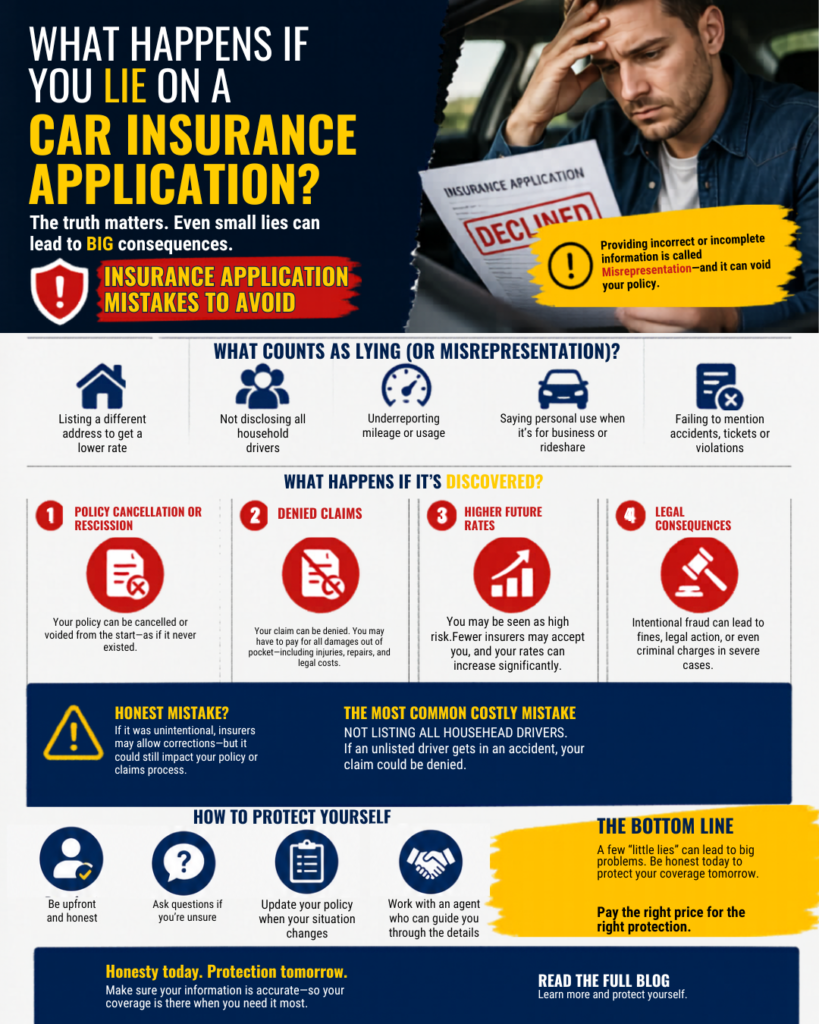
- Listing a different address to get a lower rate
- Not disclosing all household drivers
- Underreporting mileage or usage
- Saying a vehicle is for “personal use” when it is used for business or rideshare
- Failing to mention prior accidents or violations
Whether intentional or not, insurers call this misrepresentation.
Why Insurance Companies Care So Much
Insurance pricing is built entirely on risk.
Every detail you provide—location, driving habits, drivers, history—affects how your policy is rated. If that information is not accurate, the premium does not reflect the true risk.
From the insurer is perspective, that creates an unfair situation.
What Happens If It is Discovered?
This is where things get serious—especially if a claim is involved.
1. Policy Cancellation or Rescission
The insurance company may cancel your policy—or in some cases, void it back to the start date (called rescission).
That means it is treated as if the policy never existed.
2. Denied Claims
If a claim is filed and misrepresentation is discovered:
- The claim can be denied
- You could be responsible for all damages out of pocket
- This includes your vehicle, the other party, and potential injuries
3. Higher Future Rates
Once flagged, it can impact your record:
- Fewer companies may be willing to insure you
- Rates may increase significantly
You may be placed with higher-risk carriers
4. Legal Consequences (In Severe Cases)
If the misrepresentation is considered intentional fraud, there could be legal implications depending on the situation and severity.
“But What If It Was an Honest Mistake?”
This is a common concern—and context does matter.
If it is a genuine mistake:
- Some insurers may allow corrections
- Your policy may be adjusted rather than cancelled
- You might pay the corrected premium going forward
However, if the issue is discovered during a claim, even honest mistakes can complicate or delay the process.
The Most Common Costly Mistake
One of the biggest issues agencies see:
Not listing all drivers in the household.
Many people assume:
“They rarely drive my car, so it does not matter.”
But insurers typically require all household drivers to be disclosed—because they could drive the vehicle. If an unlisted driver is involved in an accident, that is when problems arise.
How to Protect Yourself
The goal is not perfection—it is accuracy.
Here are a few simple ways to avoid issues:
- Be upfront about who drives your vehicle
- Ask questions if you are unsure how to answer something
- Update your policy when your situation changes (move, new driver, new job, etc.)
- Work with an agent who can guide you through the details
Why Being Honest Actually Saves You Money Long-Term
It might seem like stretching the truth saves money upfront—but it often leads to:
- Denied claims
- Unexpected out-of-pocket costs
- Higher premiums later
In contrast, accurate information ensures:
- Proper coverage
- Smoother claims process
Long-term stability in your rates
The Bottom Line
Car insurance is built on trust and accuracy. Even small misrepresentations can have big consequences when it is time to use your coverage.
It is always better to pay the correct premium for the right protection than to risk losing coverage when you need it most.
Not sure if everything on your current policy is accurate?
A quick review can help catch any issues early—before they turn into costly problems later.