

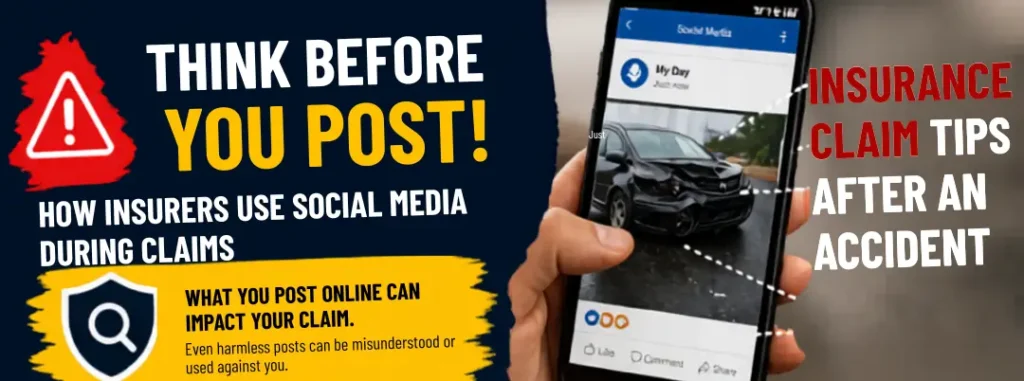
After an accident or insurance claim, your first instinct might be to share what happened—post photos, update friends, or vent about the situation. It feels natural.
But here is what most people do not realize:
What you post online can be reviewed—and potentially used—during your insurance claim.
Let’s walk through how this works and what you should avoid to protect yourself.
Do Insurance Companies Really Check Social Media?
In certain situations, yes.
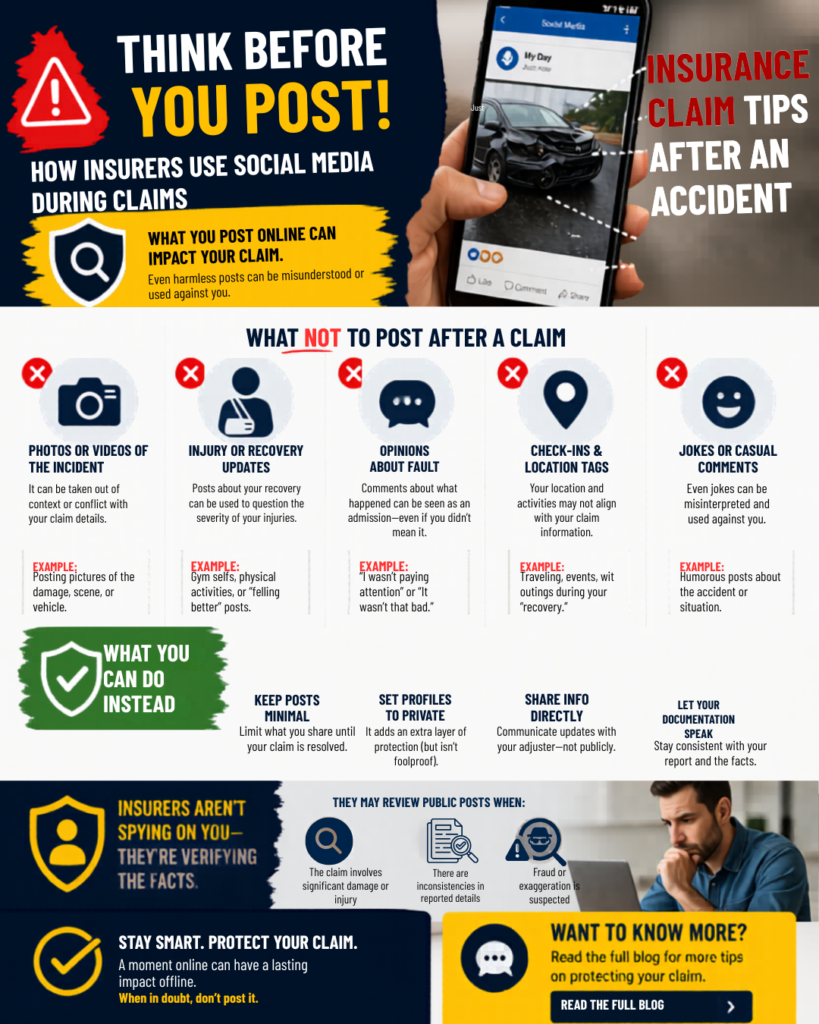
Insurance companies are responsible for verifying claims. As part of that process, they may review publicly available information—including social media posts—especially if:
- The claim involves significant damage or injury
- There are inconsistencies in reported details
- Fraud is suspected
They are not “spying” on private accounts—but anything public can be considered part of the investigation.
Why Social Media Matters During a Claim
When you file a claim, you are providing a version of events—what happened, how severe it was, and how it affected you.
If something you post online contradicts that information, it can raise questions like:
- Are the injuries as serious as reported?
- Did the accident happen the way it was described?
- Is the timeline accurate?
Even harmless posts can be taken out of context.
What Not to Post After Filing a Claim
This is where small mistakes can create big issues.
1. Photos or Videos of the Incident
Posting images of the damage, scene, or aftermath may seem helpful—but it can:
- Be misinterpreted without full context
- Conflict with official documentation
- Be used to dispute the severity of damage
2. Updates About Injuries or Recovery
If you are claiming injuries, avoid posting updates that could be misunderstood.
For example:
- Posting a gym photo or physical activity
- Sharing “feeling better” updates too soon
Even if you are improving, it can be used to question the extent of your claim.
3. Opinions About Fault
Avoid statements like:
- “It was not really that bad”
- “I did not see them coming”
- “I might have been going a little fast”
These can be interpreted as admissions—even if you did not mean them that way.
4. Check-Ins and Location Tags
Posting your location during recovery (travel, events, outings) can raise concerns if it does not align with your claim details.
5. Jokes or Casual Comments
Even humor can be taken seriously in a claims investigation. What feels like a harmless joke could be misread when taken out of context.
What You Can Do Instead
You do not need to disappear from social media—but it is smart to be cautious.
- Keep posts minimal until your claim is resolved
- Set profiles to private (though this does not guarantee content wo not be seen)
- Share updates directly with your insurance adjuster—not publicly
- Let your documentation speak for itself
The Bigger Picture: It is About Consistency
Insurance companies are not looking for reasons to deny valid claims—but they do look for consistency.
If your report, documentation, and behavior all align, your claim is much more likely to move smoothly.
Social media just happens to be one more place where inconsistencies can show up.
A Quick Reality Check
Most claims are resolved without any issues related to social media. But when problems do arise, it is often because of something that could have easily been avoided with a little awareness.
The Bottom Line
After a claim, what you post online matters more than you think. Even small or well-intentioned updates can be misunderstood and complicate your situation. When in doubt, it is better to stay quiet publicly and communicate directly with your insurance provider.
Have questions about what is safe to share during a claim?
A quick conversation can help you avoid common pitfalls and keep your claim moving in the right direction.