

Shopping your insurance regularly is smart. But there is a common concern many people have:
“If I switch companies too often, will it hurt me?”
The answer is not black and white. While switching can help you save money, doing it frequently can sometimes signal risk to insurers—and that can affect your rate.
Let’s break down how insurance companies actually view this.
Is Switching Insurance Bad?
Not inherently.
In fact, comparing quotes and switching providers when it makes sense is part of being a smart consumer. Insurance companies expect some level of shopping behavior. The issue is not switching—it is how often and why you switch.
What Insurers Look At: Stability Matters
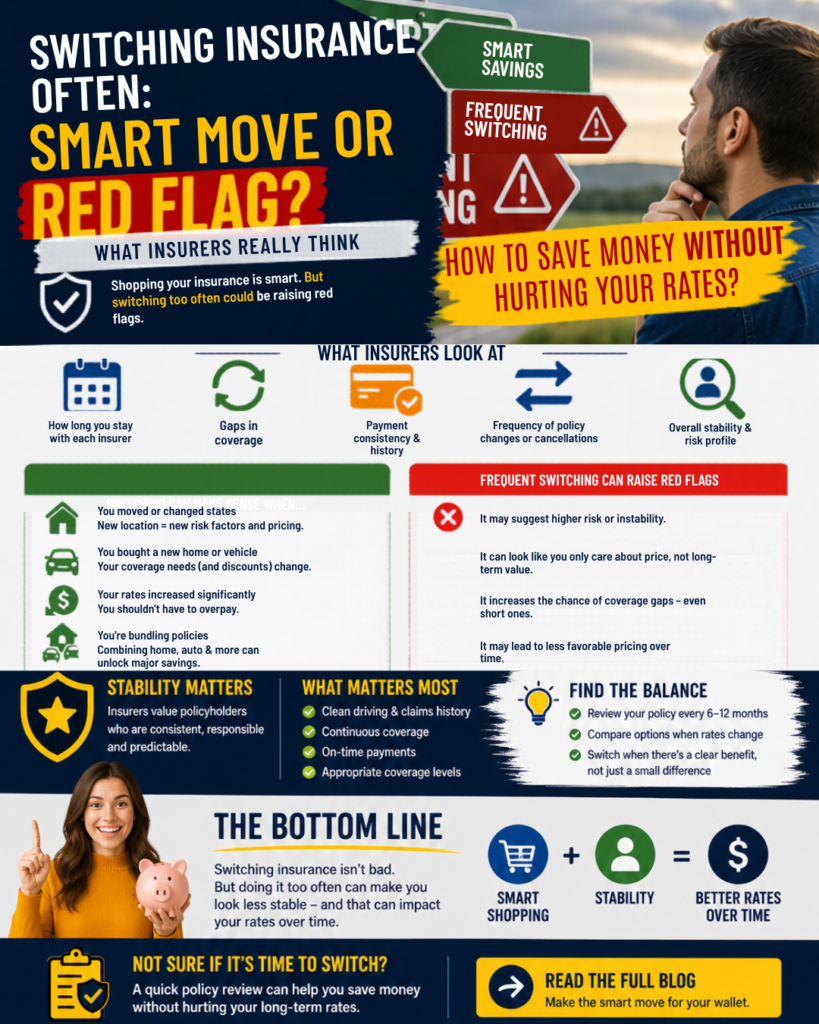
Insurance pricing is not just about your driving record or home details. Carriers also look at behavior patterns, including:
- How long you stay with each insurer
- Gaps in coverage between policies
- Payment consistency and history
- Frequency of policy changes or cancellations
This helps them evaluate how stable and predictable you are as a customer.
Why Frequent Switching Can Be a Red Flag
If you have switched insurance multiple times within a short period (for example, every 6–12 months), insurers may see that as:
1. Higher Risk Behavior
Frequent changes can suggest instability—even if your intent is simply to save money.
2. Price-Only Shopping
Some carriers associate frequent switching with customers who prioritize price over coverage, which can correlate with higher claim risk.
3. Potential Coverage Gaps
Switching often increases the chance of small lapses—even a few days without coverage can impact your rating.
When Switching Makes Sense (and Does not Hurt You)
There are plenty of valid reasons to change insurance—and insurers understand that.
You moved or changed states
Different locations have different risk factors and pricing.
You bought a new home or vehicle
Your coverage needs—and eligible discounts—change.
Your rates increased significantly
Sometimes switching is simply the smarter financial decision.
You are bundling policies
Combining home and auto can unlock meaningful savings. In these cases, switching is seen as reasonable—not risky.
The Value of Insurance “Loyalty”
Staying with the same insurer over time can have benefits:
- Loyalty or tenure discounts
- More stable pricing over time
- Fewer underwriting surprises
- Stronger relationship with your agent or carrier
However, loyalty alone does not guarantee the best rate—it just adds stability to your profile.
The Hidden Balance: Savings vs. Stability
Here is where most people get it wrong:
They either never shop their insurance, or they switch too often chasing small savings.
The smarter approach is somewhere in the middle.
- Review your policy regularly (every 6–12 months)
- Compare options when rates change
- Switch when there is a clear benefit—not just a minor difference
What Matters More Than Switching
If you are worried about how you are viewed as a policyholder, these factors typically matter more:
- Clean driving or claims history
- Continuous coverage (no lapses)
- On-time payments
- Appropriate coverage levels
These carry more weight than simply how often you switch.
The Bottom Line
Switching insurance is not a problem—but doing it too frequently can make you look less stable to insurers, which may impact your rates over time. The goal is not blind loyalty or constant switching—it is making intentional decisions that balance savings with long-term stability.
Not sure if it is the right time to switch—or stay?
A quick policy review can help you weigh your options and make a confident decision based on both cost and long-term impact.