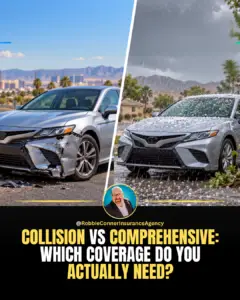

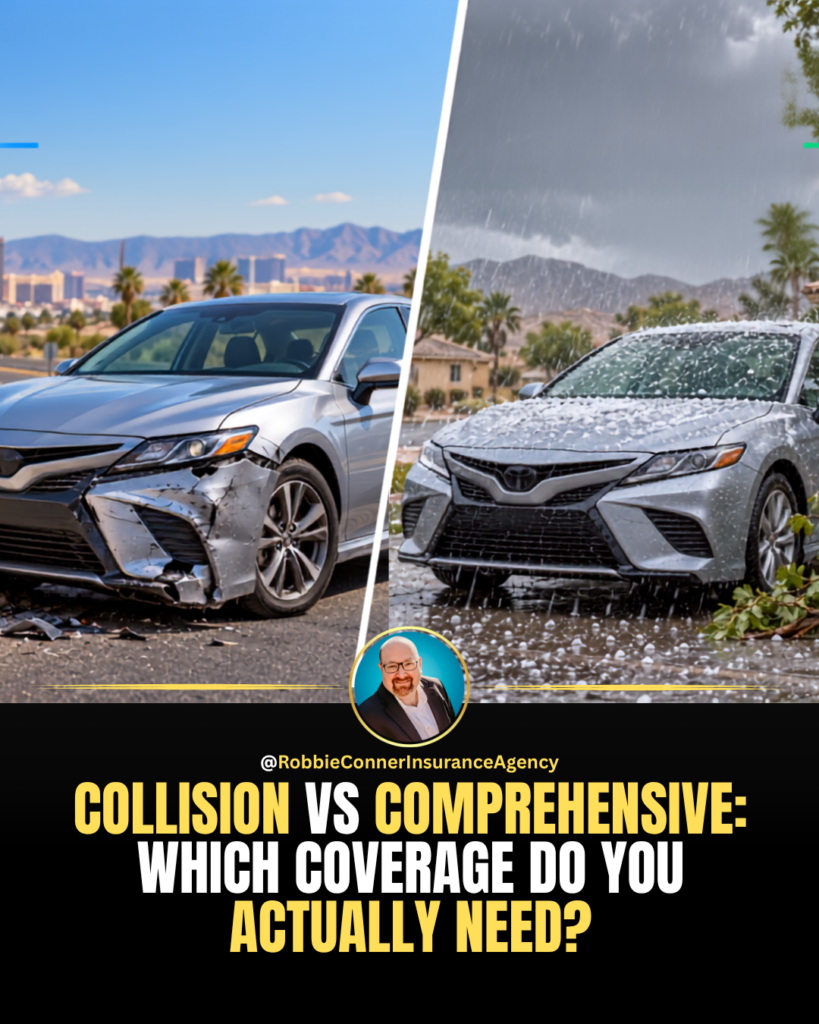
Collision and comprehensive coverage both help protect your vehicle, but they cover different types of damage. Understanding the difference can help you choose the right protection without paying for coverage that does not fit your needs.
Neither coverage is typically required by state law. However, if your vehicle is financed or leased, your lender will normally require both. Even when they are optional, keeping them may be a smart decision if repairing or replacing your vehicle would be financially difficult.
What Does Collision Insurance Cover?
Collision coverage may help pay to repair or replace your vehicle when it is damaged in a covered accident involving another vehicle or object. It can apply regardless of who caused the accident, subject to the terms of your policy.
Collision coverage may help in situations such as:
- You hit another vehicle.
- Another vehicle hits your car.
- You back into a pole.
- You hit a guardrail or wall.
- Your vehicle rolls over.
- You damage your car in a single-vehicle accident.
- You hit a pothole and damage your vehicle.
If another driver causes the accident, that driver’s liability insurance may pay for your damage. However, claims can take time, and the other driver may be uninsured or may dispute responsibility. In some situations, using your own collision coverage can help you begin the repair process sooner. Your deductible and policy conditions will still apply.
What Does Comprehensive Insurance Cover?
Comprehensive coverage may help pay for covered damage to your vehicle that is not caused by a collision.
It may provide protection for losses involving:
- Vehicle theft
- Vandalism
- Fire
- Hail or wind
- Flooding
- Falling trees or objects
- Broken glass
- Contact with animals
- Certain natural disasters
For example, comprehensive coverage may apply if your car is stolen, a tree branch falls on it, or a rock damages your windshield. The exact protection depends on your policy and carrier.
Although it is sometimes called “other than collision” coverage, comprehensive insurance does not cover every possible type of damage. Policy limits, exclusions, and deductibles still apply.
The Main Difference
The easiest way to understand the difference is to look at what caused the damage.
| Situation | Collision | Comprehensive |
| You hit another vehicle | Usually | No |
| You back into a pole | Usually | No |
| Your vehicle rolls over | Usually | No |
| Your car is stolen | No | Usually |
| Hail damages your vehicle | No | Usually |
| A tree falls on your car | No | Usually |
| Your car is vandalized | No | Usually |
| You hit a deer or another animal | No | Usually |
| A rock cracks your windshield | No | Usually |
Coverage depends on the policy, so review the actual terms with your insurance agent.
What Collision and Comprehensive Do Not Cover
Collision and comprehensive coverage protect your vehicle, but they do not replace the other parts of your car insurance policy.
They generally do not cover:
- Injuries to another person
- Damage you cause to another person’s property
- Normal wear and tear
- Mechanical breakdowns
- Routine maintenance
- Personal belongings stolen from your vehicle
- Medical expenses for you or your passengers
- The difference between a vehicle’s value and the remaining loan balance unless qualifying gap coverage applies
Liability coverage, medical payments coverage, uninsured motorist coverage, rental reimbursement, gap coverage, and other options address different risks.
Do You Need Both Coverages?
You may need both if your vehicle is financed or leased. Your lender has a financial interest in the vehicle and will usually require collision and comprehensive coverage until the loan or lease ends.
If you own your vehicle outright, the decision depends on several factors.
Consider the Value of Your Vehicle
The more your vehicle is worth, the more valuable collision and comprehensive coverage may be.
If your vehicle is totaled in a covered loss, the insurer generally bases payment on the vehicle’s actual cash value, subject to your deductible and policy terms. Actual cash value considers factors such as the vehicle’s age, condition, mileage, features, and local market value.
If you drive an older vehicle with a relatively low value, compare that value against:
- The cost of collision and comprehensive coverage
- Your deductible
- The most the insurance company may pay after a total loss
For example, if a vehicle is worth approximately $3,500 and has a $1,000 deductible, the potential claim payment after a covered total loss may be limited. That does not automatically mean you should remove the coverage, but it is worth reviewing.
Ask Whether You Could Replace the Vehicle
One of the most important questions is:
If my vehicle were stolen or totaled tomorrow, could I afford to replace it without insurance?
If replacing your vehicle would use your emergency savings, require a new loan, or prevent you from getting to work, maintaining both coverages may be worthwhile.
Think About Where You Live and Park
Your location and parking situation can affect your risk.
Comprehensive coverage may be especially useful if:
- You park outside.
- Vehicle theft is a concern in your area.
- You regularly experience hail, wind, flooding, or wildfires.
- Your vehicle is often parked near trees.
- You drive in areas where animal collisions are common.
Collision coverage may be valuable if:
- You spend significant time on busy roads.
- You regularly drive in heavy traffic.
- Multiple people use your vehicle.
- A newer or inexperienced driver is on your policy.
- Your vehicle would be expensive to repair.
Can You Purchase One Without the Other?
Some insurers may allow you to purchase comprehensive coverage without collision coverage. This can sometimes make sense for an older vehicle when you want protection against theft, fire, glass damage, or weather-related losses but no longer want collision coverage.
Purchasing collision without comprehensive coverage may be less common and depends on the insurance carrier.
If your vehicle is financed or leased, you will likely be required to carry both.
How Do Deductibles Work?
Collision and comprehensive coverage usually have separate deductibles. A deductible is the amount you agree to pay toward a covered claim.
For example, imagine a covered accident causes $5,000 in damage and your collision deductible is $500. Your insurer may pay $4,500, subject to the policy’s terms and coverage limits.
Higher deductibles may lower your premium, but they increase your out-of-pocket cost after a loss. Lower deductibles may cost more but can make a claim easier to manage financially.
Choose a deductible you could comfortably pay on short notice.
Should You Remove Collision or Comprehensive From an Older Car?
There is no single vehicle age at which everyone should remove these coverages. Two cars of the same age can have very different values, conditions, repair costs, and importance to their owners.
Before removing either coverage, consider:
- Your vehicle’s current estimated market value
- Your collision and comprehensive deductibles
- The annual cost of each coverage
- Your ability to pay for major repairs
- Your ability to replace the vehicle
- Whether you still owe money on it
- Your local risk of theft, vandalism, and weather damage
- Whether losing the vehicle would affect your employment or family responsibilities
You do not always have to remove both coverages at the same time. Depending on your carrier and circumstances, keeping comprehensive while removing collision may be an option.
Are Collision and Comprehensive the Same as “Full Coverage”?
No. “Full coverage” is not an official insurance policy or a guarantee that everything will be covered.
People commonly use the phrase to describe a policy containing liability, collision, and comprehensive coverage. However, such a policy can still have low liability limits, high deductibles, exclusions, and missing optional protection.
It may not include:
- Rental reimbursement
- Roadside assistance
- Gap coverage
- Uninsured or underinsured motorist coverage
- Medical payments coverage
- Custom equipment coverage
- Rideshare coverage
Instead of asking for “full coverage,” ask for a clear explanation of every coverage, limit, and deductible included in your quote.
Questions to Ask Before Making a Decision
Before adding, changing, or removing coverage, ask your insurance agent:
- What is my vehicle currently worth?
- What would my policy pay if the vehicle were totaled?
- How much am I paying for collision and comprehensive separately?
- How much would my premium change with a different deductible?
- Does my lender require both coverages?
- Is glass damage subject to my comprehensive deductible?
- Would I have rental transportation after a covered claim?
- Do I need loan or lease gap coverage?
- Are there exclusions I should understand?
These questions can help you compare the cost of the coverage with the financial risk of going without it.
Find the Right Protection for Your Vehicle
Collision and comprehensive coverage serve different purposes. Collision generally protects your vehicle after an accident involving another vehicle or object, while comprehensive generally protects it from theft, vandalism, weather, falling objects, and other covered non-collision losses.
Whether you need one or both depends on your vehicle, finances, deductible, loan requirements, and ability to recover after an unexpected loss.
The team at Robbie Conner Agency can review your current car insurance, explain your options in plain language, and help you choose protection that fits your needs and budget. We proudly assist drivers throughout Nevada, Arizona, and California.
Contact Robbie Conner Agency today for a personalized policy review and a free car insurance quote.
Coverage availability, requirements, limits, deductibles, discounts, and eligibility vary by state, carrier, and policy. This article provides general information and does not change or replace the terms of any insurance policy.