
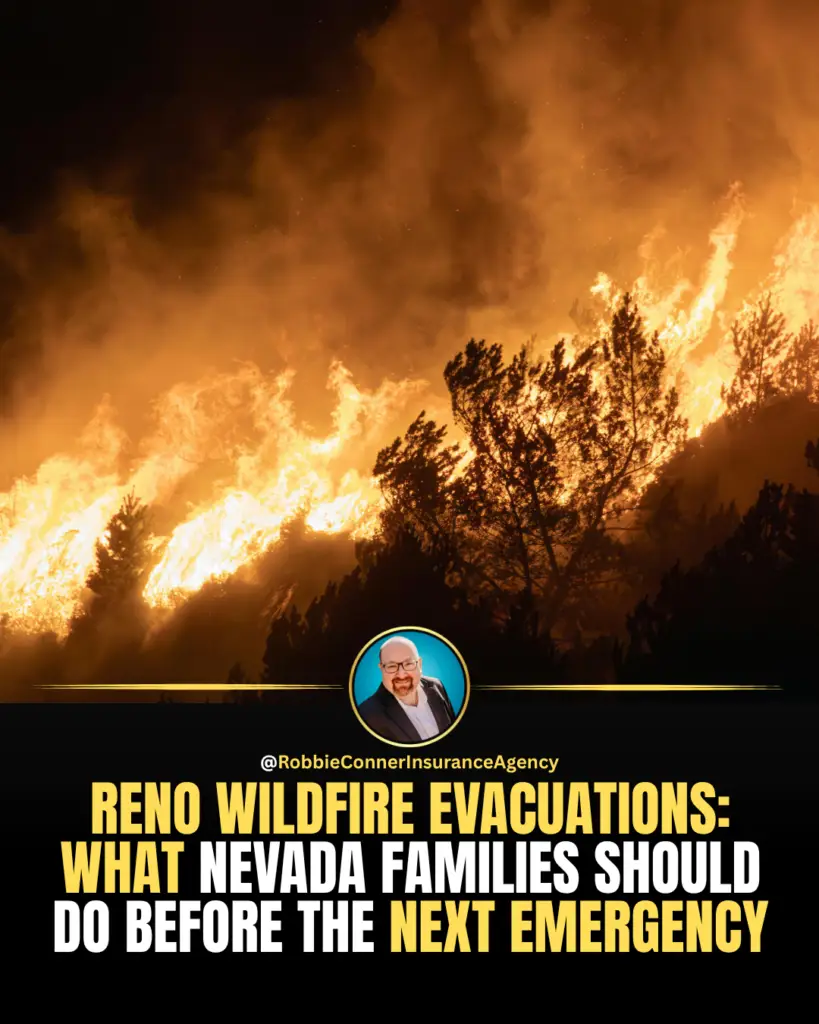
The recent wildfire near Reno is a powerful reminder of how quickly an ordinary day can turn into an emergency.
As shown in The New York Times’ coverage of the Reno-area evacuations, families had to make urgent decisions as flames approached nearby neighborhoods. Residents gathered what they could, navigated crowded roads, and left their homes without knowing what they would find when they returned.
The fast-moving Hawk Fire burned thousands of acres near Reno and forced widespread evacuations across Washoe County. At one point, as many as 90,000 people were affected by evacuation orders or warnings. More than 30 homes were destroyed, several people were injured, and thousands of properties lost power, according to Associated Press reporting.
For Nevada residents, the message is clear: wildfire preparation should begin before smoke is visible and before an evacuation notice arrives.
Wildfires Can Move Faster Than Expected
Nevada’s dry vegetation, high temperatures, low humidity, and strong winds can create dangerous conditions for rapidly spreading fires. A fire that appears distant can change direction or grow significantly in a short period.
During an emergency, residents may have only minutes to decide what to take and where to go. Roads can become congested, electricity may be interrupted, and cell service can become unreliable.
That is why every household should have an evacuation plan prepared in advance.
Know the Difference Between an Evacuation Warning and an Evacuation Order
Emergency notifications may use different terms depending on the local authority, but residents will commonly encounter two important instructions.
Evacuation Warning
An evacuation warning means there is a potential threat to your area. You should prepare to leave and closely monitor official information.
During a warning:
- Pack your vehicle.
- Gather family members and pets.
- Charge your phones.
- Review your evacuation routes.
- Check on neighbors who may need assistance.
- Be prepared to leave immediately.
People who need extra time—including older adults, families with young children, individuals with disabilities, and households with large animals—should consider leaving during the warning stage.
Evacuation Order
An evacuation order means there is an immediate threat and residents should leave the area as directed by emergency officials.
Do not delay to gather nonessential belongings. Personal safety should always come first.
Create a Household Evacuation Plan
Every person in your household should know what to do if you cannot remain at home.
Your plan should include:
- At least two ways to leave your neighborhood
- A meeting location outside the affected area
- A family contact who lives outside your community
- A plan for children, older relatives, and household members with disabilities
- Transportation arrangements if a vehicle is unavailable
- A plan for pets and larger animals
- A list of nearby shelters, hotels, and safe locations
Practice the plan with your household. A plan is more helpful when everyone understands it before an emergency occurs.
Prepare a Wildfire Go Bag
A go bag should contain essential items you may need during the first several days away from home. Keep it somewhere that can be reached quickly.
Consider including:
- Identification and copies of important documents
- Prescription medications
- First-aid supplies
- Water and nonperishable food
- Phone chargers and portable power banks
- Flashlights and extra batteries
- N95 masks for smoke and ash
- Extra clothing
- Basic hygiene items
- Cash
- Emergency contact information
- Copies of your insurance information
- Spare keys
- Pet food, carriers, leashes, and medications
- Supplies for infants, older adults, or family members with special needs
Do not wait until an evacuation warning to begin gathering these items. Emergency supplies should be prepared and checked regularly.
Make a Home Inventory Before a Loss Happens
After a major fire, remembering everything inside your home can be extremely difficult. A home inventory can help you document your belongings when filing a covered insurance claim.
Walk through every room and record a video showing your furniture, appliances, electronics, clothing, tools, decorations, and other personal property. Open closets, cabinets, and drawers so their contents are visible.
For valuable items, keep:
- Photographs
- Receipts
- Serial numbers
- Appraisals
- Product descriptions
Store copies somewhere away from your home, such as secure cloud storage. A list saved only on a computer inside the property may be lost in the same event.
Update your inventory after major purchases or home improvements.
Understand How Homeowners Insurance May Respond
A homeowners policy may provide several types of protection after a covered wildfire loss, subject to the policy’s limits, deductibles, conditions, and exclusions.
Dwelling Coverage
Dwelling coverage may help repair or rebuild the physical structure of your home after covered fire damage.
Your dwelling limit should reflect the estimated cost to rebuild the home—not simply its market value or the amount you paid for it. Construction materials, labor expenses, debris removal, and local building requirements can all affect rebuilding costs.
Other Structures Coverage
This coverage may help protect detached structures on the property, such as a fence, shed, or detached garage.
Personal Property Coverage
Personal property coverage may help repair or replace belongings damaged or destroyed in a covered fire.
Check whether your policy settles covered personal property losses using replacement cost or actual cash value. Actual cash value may account for age and depreciation, while replacement-cost coverage may provide broader protection under the policy’s terms.
Loss-of-Use Coverage
If a covered loss makes your home uninhabitable, loss-of-use coverage—sometimes called additional living expense coverage—may help with certain increases in living costs while you are displaced.
Depending on the policy and circumstances, eligible expenses may include:
- Temporary lodging
- Additional meal expenses
- Pet boarding
- Laundry
- Storage
- Increased transportation costs
The Nevada Division of Insurance’s Hawk Fire guidance notes that residents affected by fire evacuations may be eligible for reimbursement of certain loss-of-use or additional living expenses.
Coverage is not automatic in every situation. Contact your insurance carrier or agent promptly and save every receipt.
Review Your Insurance Before Wildfire Season
The worst time to discover a coverage gap is after a loss.
Ask your insurance agent to review:
- Your dwelling coverage limit
- Your estimated rebuilding cost
- Extended or additional replacement-cost options
- Personal property settlement provisions
- Loss-of-use limits
- Coverage for detached structures
- Policy deductibles
- Scheduled coverage for jewelry, collectibles, or other valuables
- Coverage for wildfire-related smoke damage
- Any exclusions or limitations
- Your contact and mortgage information
Tell your agent about renovations, room additions, upgraded kitchens, finished basements, detached structures, solar equipment, or other major improvements. If your policy does not reflect the current features of your home, its rebuilding estimate may no longer be accurate.
The Nevada Division of Insurance also encourages homeowners to review their insurance protection and take wildfire-preparedness steps before an emergency.
What Renters Should Know
Renters should not assume their landlord’s insurance protects their belongings.
A landlord’s policy generally protects the building—not a tenant’s furniture, electronics, clothing, and other personal property. Renters insurance may help cover personal belongings after a covered fire and may also provide loss-of-use protection if the rental becomes uninhabitable.
Renters should also create a personal property inventory, understand their deductible, and confirm how their belongings would be valued after a covered loss.
Do Not Forget Your Vehicles
Comprehensive auto coverage may help pay for covered wildfire, smoke, falling-object, or heat-related damage to an insured vehicle.
Liability-only auto insurance does not provide physical damage protection for your own car. If you are unsure whether comprehensive coverage is included, review your declarations page or contact your insurance agent.
When evacuating:
- Keep your fuel tank or battery adequately supplied.
- Park facing the direction you may need to leave.
- Keep vehicle keys easy to find.
- Load emergency supplies before conditions become urgent.
- Never drive through flames or heavy smoke unless directed by emergency personnel.
If You Are Ordered to Evacuate
If local officials tell you to leave:
- Follow the evacuation instructions immediately.
- Take people and pets first.
- Bring medications, identification, phones, chargers, and essential documents.
- Use official evacuation routes.
- Do not take shortcuts through closed or unfamiliar roads.
- Tell a trusted contact where you are going.
- Save receipts for lodging, food, transportation, and other emergency expenses.
- Do not return until authorities say the area is safe.
If there is enough time and authorities have not instructed you to leave immediately, you may also close windows and doors, move combustible outdoor items away from the home, and shut off appropriate equipment. Never delay evacuation to protect property.
After a Wildfire Loss
Once authorities allow you to return, use caution. Burned areas may contain unstable structures, damaged utilities, hot spots, ash, sharp objects, and hazardous materials.
If your property is damaged:
- Contact your insurance carrier or agent promptly.
- Photograph and record the damage before moving items.
- Take reasonable steps to prevent additional damage when it is safe.
- Keep damaged property unless the insurer authorizes disposal.
- Save all receipts.
- Keep notes of conversations with adjusters and contractors.
- Ask questions before signing repair agreements.
- Be cautious of contractors who demand large upfront payments or pressure you to act immediately.
Your safety remains the priority. Do not enter a damaged structure until officials confirm that it is safe.
Preparation Provides More Than Financial Protection
Insurance cannot replace sentimental belongings or erase the emotional impact of leaving your home during an emergency. However, a carefully reviewed policy, a documented inventory, and a practiced evacuation plan can make recovery less confusing and financially overwhelming.
The Reno-area evacuations demonstrate that wildfire preparedness is not only for people living deep in the mountains or far from a city. Wind-driven fires can threaten suburban neighborhoods and major population centers with very little notice.
Taking a few small steps today could make an enormous difference during an emergency.
Let Us Help You Review Your Protection
The team at Robbie Conner Agency is here to help Nevada families understand their homeowners, renters, landlord, condo, and auto insurance options.
We can review your current policy, discuss possible coverage gaps, and help make sure the information used to estimate your home’s rebuilding cost is up to date.
Contact Robbie Conner Agency to schedule a personalized insurance review. Preparing now can help you protect your home, your finances, and the people who matter most.
Coverage availability, limits, deductibles, reimbursement requirements, and eligibility vary by insurance carrier, state, policy, and individual loss. This article is for general educational purposes and does not alter or replace the terms of any insurance policy. Always follow instructions from local emergency officials during a wildfire or evacuation.