
Colorado River water cuts and what homeowners need to know, in 60 seconds
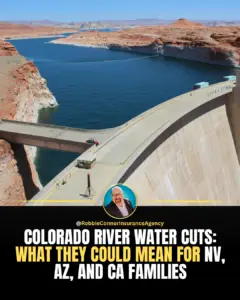
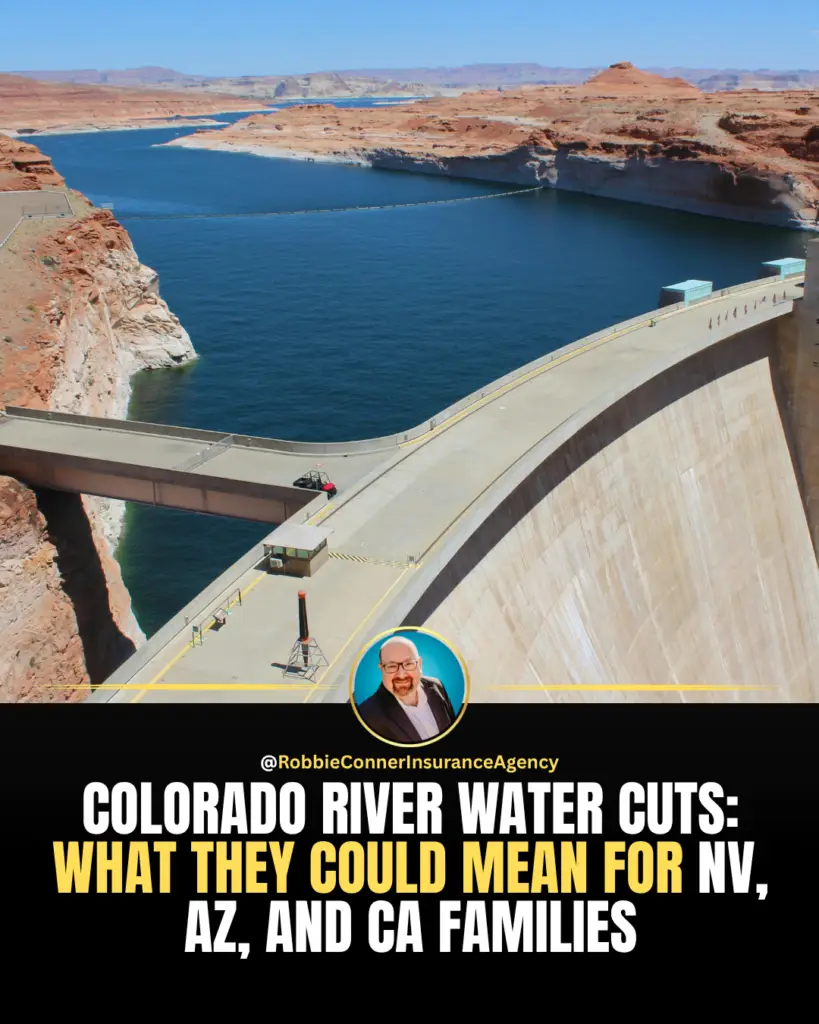
– Major water cuts are coming in 2027–2028. Nevada, Arizona, and California will collectively reduce annual Colorado River water use by approximately 1.25 million acre-feet, with Arizona facing the largest reduction.
– Your household water isn’t expected to suddenly stop. Most homeowners should continue receiving basic water service, but local utilities may introduce stricter watering schedules, conservation rules, or higher rates.
– Drought affects more than your water bill. Prolonged dry conditions can contribute to soil movement, foundation problems, dying landscaping, and increased wildfire risks.
– Home insurance doesn’t cover everything. Standard homeowners insurance generally excludes drought-related damage, gradual deterioration, and flood damage. Certain sudden and accidental water damage may be covered, depending on your policy.
– Do this: Fix leaks, follow local watering restrictions, maintain your property, and review your homeowners insurance coverage. Robbie Conner Agency helps homeowners in Nevada, Arizona, and California understand their coverage and identify potential gaps.
The Colorado River has supported life and growth across the American West for generations. It supplies water to homes, farms, businesses, tribal communities, and power facilities throughout seven states and Mexico.
Now, after decades of drought, rising temperatures, and heavy demand, federal officials have announced significant reductions in the amount of Colorado River water available to California, Nevada, and Arizona.
According to a recent CBS News report, the three states will collectively reduce their annual use by approximately 1.25 million acre-feet during 2027 and 2028. Arizona is expected to experience the largest reduction, while Mexico will also reduce its use under an existing international agreement.
For families in Las Vegas, Phoenix, Southern California, and surrounding communities, the announcement may sound alarming. It does not necessarily mean household faucets will suddenly stop running. However, it does show that water conservation and long-term planning are becoming increasingly important across the Southwest.
Why Is the Colorado River in Trouble?
The Colorado River begins in the Rocky Mountains and travels approximately 1,400 miles before reaching Mexico. It supports water supplies, agriculture, hydropower, recreation, wildlife, and local economies throughout the region.
Between 35 million and 40 million people rely on the river for at least part of their municipal water needs, according to the U.S. Bureau of Reclamation.
The river system is under pressure for several reasons:
- A prolonged drought has affected the region for more than two decades.
- Warmer temperatures increase evaporation and dry out soil.
- Reduced snowpack means less water flows into the river.
- Farms, cities, industries, and communities all depend on a limited supply.
- Lake Mead and Lake Powell have reached historically low levels.
- Population growth has increased demand in parts of the Southwest.
The Bureau of Reclamation reported in April 2026 that Colorado River system storage had fallen to approximately 36% of capacity. Record-low snowpack and unusually high March temperatures added further pressure to the system. The combined storage of Lake Mead and Lake Powell later reached its lowest point since Lake Powell began filling in the 1960s.
What Are the New Water Cuts?
Federal officials have established operating guidelines for the Colorado River during 2027 and 2028.
Under the near-term plan:
- California, Nevada, and Arizona will collectively reduce their annual Colorado River use by approximately 1.25 million acre-feet.
- Arizona will receive the largest reduction among the three states.
- Mexico will reduce its annual use by approximately 250,000 acre-feet.
- Additional reductions may be possible if conditions continue to worsen.
- Longer-term Colorado River operating rules are still being developed.
The federal government’s current framework is intended to stabilize the river system while the seven Colorado River Basin states continue discussing how supplies should be managed in the future.
The Bureau of Reclamation’s Colorado River Basin update explains that the 2027–2028 guidelines are designed to maintain water deliveries and protect critical infrastructure while allowing states to continue working toward broader agreements.
Does This Mean Homes Will Lose Water?
For most households, the cuts are not expected to result in an immediate loss of basic indoor water service.
State allocations are managed through water authorities, irrigation districts, cities, agricultural agencies, and other major users. The effect on an individual household will depend on decisions made by local water providers.
Residents could eventually see changes involving:
- Outdoor watering schedules
- Landscape restrictions
- Higher water rates
- Increased enforcement of water-waste rules
- Incentives to replace grass with desert landscaping
- Limits on new pools or certain water features
- Updated building and development requirements
- Greater use of recycled water
- Additional conservation programs
The exact rules will vary by city and water provider. Residents should follow updates from their local utility rather than relying only on statewide or national headlines.
What the Cuts Could Mean for Nevada
Southern Nevada receives most of its water from the Colorado River through Lake Mead, making the river essential to the Las Vegas Valley.
Nevada has already invested heavily in water conservation. Indoor water used in homes is treated and returned to Lake Mead, allowing the region to receive return-flow credits. Outdoor water use creates a greater challenge because much of it evaporates or is absorbed into the ground.
Nevada residents may continue to see a strong focus on:
- Seasonal watering schedules
- Removal of nonfunctional grass
- Water-smart landscaping
- Leak detection and repair
- Pool-cover incentives
- Restrictions against allowing water to run into streets or gutters
- Conservation requirements for businesses and new developments
Although Nevada receives a relatively small share of the Colorado River compared with California and Arizona, the river remains extremely important to Southern Nevada’s homes, businesses, and future growth.
What the Cuts Could Mean for Arizona
Arizona is expected to absorb the largest portion of the reductions.
However, not every Arizona water user will experience the cuts in the same way. The impact will depend on where a household receives its water and the priority assigned to that supply.
Agriculture and users with lower-priority Colorado River rights may experience larger reductions before certain municipal users. Communities that rely heavily on groundwater could face different long-term challenges, including declining groundwater levels and tighter development requirements.
Arizona residents should monitor information from their city, water provider, and the Arizona Department of Water Resources.
What the Cuts Could Mean for California
California receives more Colorado River water than any other state. The river is especially important to Southern California cities and major agricultural regions.
The immediate effect on an individual California household will depend on the local water agency and the other supplies available in that area. Some communities receive water from multiple sources, including the State Water Project, local groundwater, recycled water, and the Colorado River.
Residents may see stronger conservation requirements, changes to outdoor water use, or higher rates as agencies invest in new infrastructure and water-saving programs.
Practical Ways to Conserve Water at Home
Water conservation does not have to mean making your home uncomfortable. Small changes across thousands of households can produce meaningful savings.
Check for Hidden Leaks
A small plumbing leak can waste a surprising amount of water and may also cause expensive property damage.
Regularly inspect:
- Toilets
- Faucets
- Water heaters
- Washing machine hoses
- Dishwasher connections
- Refrigerator water lines
- Irrigation systems
- Pool equipment
- Pipes beneath sinks
An unusually high water bill, damp cabinet, musty smell, or unexplained sound of running water may indicate a leak.
Follow Local Watering Rules
Outdoor irrigation is a major source of water use in desert communities.
Water plants during approved hours, adjust your schedule for the season, and avoid watering during high winds. Check sprinkler heads for damage and make sure water is reaching landscaping rather than sidewalks and streets.
Choose Water-Smart Landscaping
Native and desert-adapted plants generally require less water than traditional grass. Rock, mulch, drip irrigation, and shade elements can create an attractive outdoor area with lower water demand.
Before removing landscaping, check neighborhood rules and consider how changes could affect drainage, soil stability, shade, and heat around the home.
Use Pool Covers
Pool covers can reduce evaporation and may also help keep debris out of the water. Homeowners should follow appropriate safety precautions, especially in households with children or pets.
Upgrade Fixtures and Appliances
Water-efficient faucets, showerheads, toilets, dishwashers, and washing machines can reduce water use without requiring major lifestyle changes.
Some local utilities offer rebates or incentives for qualifying upgrades.
Adjust Everyday Habits
Simple habits can make a difference:
- Turn off the faucet while brushing your teeth.
- Run dishwashers and washing machines with full loads.
- Shorten showers when possible.
- Do not use a running hose to clean driveways.
- Keep drinking water in the refrigerator instead of running the faucet until it becomes cold.
- Use the correct water level for smaller laundry loads.
- Report broken sprinklers or water leaks promptly.
What Does Drought Mean for Home Insurance?
It is important to understand that drought itself is generally not treated like a sudden, accidental loss under a standard homeowners policy.
Homeowners insurance commonly protects against specific covered events, such as fire, certain types of sudden water damage, theft, wind, or vandalism. It generally does not pay simply because an area experiences drought, a reservoir loses water, landscaping dies from insufficient irrigation, or a household’s water bill increases.
Damage that develops gradually because of dry soil, settling, cracking, poor maintenance, or earth movement may also be limited or excluded, depending on the policy.
However, every situation is different. Coverage depends on what caused the damage, how it occurred, and the language of the policy.
Drought Is Different From Sudden Water Damage
A regional water shortage should not be confused with accidental water damage inside a home.
For example, a homeowners policy may respond differently to:
- A pipe that suddenly bursts
- A slowly leaking pipe that was not repaired
- Groundwater entering a home
- Flooding from heavy rain
- Sewer or drain backup
- Foundation movement caused by soil conditions
- Damage caused by a failed irrigation system
These events may look similar because they involve water or moisture, but they can be treated very differently under an insurance policy.
Homeowners should ask their agent about:
- Sudden and accidental water damage
- Water backup coverage
- Flood insurance
- Service line coverage
- Foundation and earth-movement exclusions
- Mold limitations
- Landscaping coverage
- Requirements to prevent additional damage
Flood damage is generally not covered by a standard homeowners policy. Separate flood insurance may be necessary for qualifying protection.
Keep Home Maintenance Records
As drought conditions continue, good documentation becomes especially valuable.
Keep records of:
- Plumbing inspections
- Leak repairs
- Irrigation maintenance
- Roof inspections
- Foundation evaluations
- Landscaping changes
- Pool repairs
- Appliance replacements
- Water bills that show unusual usage
- Photographs of your property’s condition
If damage occurs, these records may help establish when the problem began and what steps you took to maintain the property.
Review Your Home’s Rebuilding Estimate
Water shortages can affect communities in ways that extend beyond household water use. Long-term drought may influence development, agriculture, energy production, wildfire risk, landscaping practices, and the cost of maintaining properties.
It is important to make sure your homeowners policy reflects your home’s current features and estimated rebuilding cost.
Tell your insurance agent about:
- Room additions
- Kitchen or bathroom renovations
- Upgraded flooring or cabinets
- Solar equipment
- Pools and spas
- Detached structures
- Outdoor kitchens
- Major landscaping improvements
- Changes to roofing or exterior materials
The market value of a home and the cost to rebuild it are not the same. Your coverage should be reviewed using current construction information.
Prepare for the Broader Effects of Drought
Water shortages can contribute to additional risks, including dry vegetation and increased wildfire danger.
Homeowners can reduce risk by:
- Removing dead plants and dry debris
- Trimming vegetation near structures
- Cleaning leaves from roofs and gutters
- Keeping combustible materials away from the home
- Maintaining irrigation equipment
- Preparing an emergency evacuation plan
- Creating a home inventory
- Reviewing insurance coverage before an emergency
Water conservation and wildfire preparation should be viewed as connected parts of living responsibly in the Southwest.
A Long-Term Challenge Requires Local Action
The new Colorado River reductions are not a temporary inconvenience that will disappear after one wet winter. Federal officials are preparing for the possibility of continued drought and uncertain water supplies.
That does not mean families should panic. It means communities, businesses, farms, and households will need to use water more carefully and prepare for changing conditions.
The most helpful steps residents can take are to follow local water guidance, repair leaks quickly, reduce unnecessary outdoor use, maintain their properties, and stay informed.
Let Us Help You Review Your Insurance Protection
The team at Robbie Conner Agency proudly serves families throughout Nevada, Arizona, and California.
Although homeowners insurance does not solve the Colorado River shortage, the right coverage can help protect your home and finances from certain unexpected events. We can review your current policy, explain your protection in simple terms, and identify possible coverage gaps.
Contact Robbie Conner Agency today to schedule a personalized home insurance review.
Coverage availability, limits, exclusions, deductibles, and eligibility vary by state, insurance carrier, policy, and individual loss. Drought, water restrictions, utility interruptions, landscaping losses, earth movement, flood, and gradual damage may be excluded or limited. This article provides general educational information and does not alter or replace the terms of any insurance policy.