
Choosing car insurance is not only about finding the lowest price. The right policy should protect your vehicle, your finances, and the people who depend on you.
Every driver has different needs. Your ideal coverage will depend on where you live, what you drive, how often you drive, and how much financial risk you are comfortable accepting. Understanding a few basic coverage options can help you make a more confident decision.
Start With Your State’s Minimum Requirements
Most states require drivers to carry a minimum amount of liability insurance. Liability coverage can help pay for another person’s injuries or property damage when you are legally responsible for an accident.
State minimum coverage may allow you to drive legally, but it may not provide enough protection after a serious accident. Medical bills, vehicle repairs, and legal expenses can quickly exceed minimum policy limits. When that happens, you could be personally responsible for the remaining amount.
For this reason, it is important to consider more than the minimum requirement when choosing your coverage limits.
Understand the Main Types of Car Insurance Coverage
A car insurance policy may include several different types of protection.
Bodily Injury Liability
Bodily injury liability may help pay for another person’s medical expenses, lost income, and certain legal costs if you cause an accident.
Higher limits may be worth considering if you own a home, have savings, earn a steady income, or have other assets you want to protect.
Property Damage Liability
Property damage liability may help pay for damage you cause to another person’s vehicle or property. This could include a car, fence, building, or other structure.
With vehicle repair and replacement costs continuing to rise, low property damage limits may not go very far after a multi-vehicle accident.
Collision Coverage
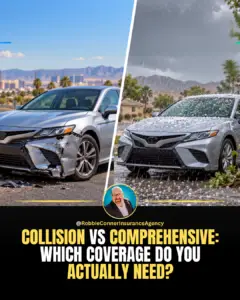
Collision coverage may help repair or replace your vehicle if it is damaged in a covered accident, regardless of who caused it. It may also cover certain single-vehicle accidents, such as hitting a guardrail.
If you financed or leased your vehicle, your lender will normally require this coverage.
Comprehensive Coverage
Comprehensive coverage may help protect your vehicle from covered losses that do not involve a collision. Examples may include:
- Theft
- Vandalism
- Fire
- Hail
- Falling objects
- Certain animal-related damage
- Weather-related losses
Comprehensive coverage is especially important when replacing or repairing your vehicle would create a financial hardship.
Uninsured and Underinsured Motorist Coverage
Not every driver carries enough insurance. Some drivers may not have insurance at all.
Uninsured and underinsured motorist coverage may help protect you and your passengers when an at-fault driver has no insurance or does not have enough coverage to pay for a covered loss.
Depending on the state and policy, different options may apply to injuries and property damage.
Medical Payments or Personal Injury Protection
Medical payments coverage or personal injury protection may help pay certain medical expenses following an accident. Personal injury protection may also include additional benefits, depending on the state.
Your available options will depend on where your policy is issued.
Optional Coverage
You may also be able to add useful coverage such as:
- Rental reimbursement
- Roadside assistance
- New-car replacement
- Loan or lease gap coverage
- Custom equipment coverage
- Rideshare coverage
These options are not necessary for every driver, but they can be valuable in the right situation.
Think About the Value of Your Vehicle
The age and value of your vehicle should influence your decision.
If your vehicle is newer, financed, leased, or expensive to replace, collision and comprehensive coverage may be important. If your vehicle is older and has a low market value, compare its estimated value with the cost of carrying these coverages and the deductible you would have to pay.
Removing physical damage coverage can lower your premium, but it also means you may have to pay the full cost of repairing or replacing your vehicle after certain losses.
Ask yourself one simple question:
If my vehicle were totaled tomorrow, could I comfortably afford to replace it?
If the answer is no, keeping broader vehicle protection may make sense.
Choose a Deductible You Can Afford
A deductible is the amount you agree to pay toward a covered collision or comprehensive claim before your insurance pays the remaining covered amount.
A higher deductible may reduce your premium, but it also increases what you must pay after a loss. A lower deductible may cost more each month but can make an unexpected claim easier to manage.
Choose a deductible based on the amount you could realistically pay without creating financial stress. Saving a small amount each month may not be worth it if the deductible would be unaffordable after an accident.
Consider Your Personal Financial Risk
Your insurance limits should reflect more than the value of your vehicle. They should also consider what you could lose if you were responsible for a serious accident.
Factors to consider include:
- Your income
- Your savings
- Homeownership
- Other vehicles or property
- The number of drivers in your household
- How frequently you drive
- Whether you regularly carry passengers
- Whether a young or inexperienced driver is on the policy
Drivers with significant assets may also want to discuss a personal umbrella policy. An umbrella policy can provide additional liability protection above the limits of qualifying auto and home policies.
Do Not Rely on the Phrase “Full Coverage”
“Full coverage” is commonly used, but it is not a specific insurance policy or guarantee that every loss will be covered.
People often use the phrase to describe a policy that includes liability, collision, and comprehensive coverage. However, every policy still has limits, deductibles, conditions, and exclusions. Optional protection such as rental reimbursement, roadside assistance, gap coverage, or higher uninsured motorist limits may not be included.
Instead of asking for “full coverage,” ask your insurance agent to explain:
- What is covered
- What is not covered
- Your liability limits
- Your deductibles
- Which optional coverages are included
- How the policy would respond in common accident scenarios
Understanding the actual coverage is much more important than relying on a general label.
Look for Discounts Without Sacrificing Protection
Price matters, but the cheapest policy is not always the best value. A lower premium may come with lower limits, higher deductibles, or fewer coverage options.
Depending on the carrier and your eligibility, possible discounts may include:
- Multiple-policy or bundling discounts
- Multiple-vehicle discounts
- Safe-driving discounts
- Automatic payment discounts
- Paperless policy discounts
- Good-student discounts
- Vehicle safety-feature discounts
- Low-mileage or usage-based savings programs
Always compare quotes using similar limits, deductibles, and coverage selections. Otherwise, one quote may appear less expensive simply because it provides less protection.
Review Your Policy When Life Changes
Your car insurance should change when your life changes. Consider requesting a policy review when you:
- Buy or sell a vehicle
- Move to a new address
- Add a household driver
- Have a newly licensed driver
- Get married
- Purchase a home
- Begin working from home
- Change how far you drive
- Pay off a vehicle loan
- Start using your vehicle for business or rideshare work
Even when nothing major changes, reviewing your policy at least once a year can help identify coverage gaps and available discounts.
Questions to Ask Before Choosing a Policy
Before making your final decision, ask:
- Are my liability limits high enough to protect my income and assets?
- Could I afford to repair or replace my vehicle without collision or comprehensive coverage?
- Can I comfortably pay my deductible after an unexpected loss?
- Do I have enough protection from uninsured or underinsured drivers?
- Would I need a rental vehicle while mine is being repaired?
- Does my policy cover every driver and vehicle in my household correctly?
- Am I receiving all the discounts for which I may qualify?
- Are there exclusions or limitations I should understand?
Let a Local Insurance Professional Help
You do not have to make these decisions alone. A knowledgeable insurance agent can compare your options, explain the differences in plain language, and help you build a policy around your needs and budget.
The team at Robbie Conner Agency serves drivers throughout Nevada, Arizona, and California. We can review your current car insurance, identify possible coverage gaps, and check whether you qualify for available discounts and potential savings.
Contact Robbie Conner Agency today for a personalized car insurance review and a free quote. Because the right insurance is not simply the least expensive policy—it is the protection you can depend on when something unexpected happens.
Coverage availability, requirements, limits, discounts, and eligibility vary by state, insurance carrier, and policy. This article provides general information and does not modify or replace the terms of any insurance policy.